
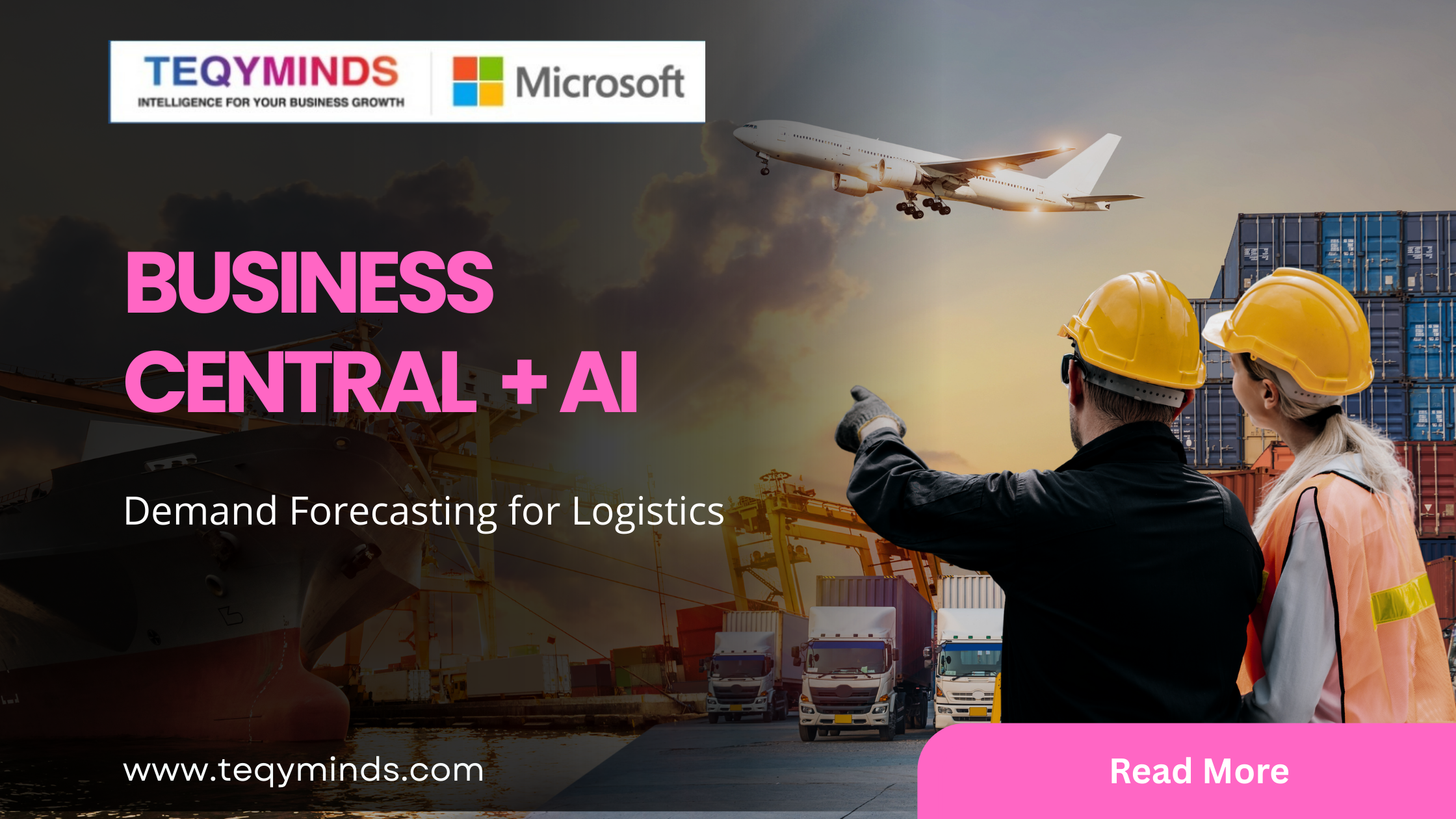
In the logistics industry, timing is everything. Having too much inventory ties up capital and increases storage costs, while having too little can disrupt operations and damage customer trust. Traditionally, demand planning relied heavily on spreadsheets, historical averages, and manual judgment — methods that often struggled to keep up with today’s dynamic markets.
This is where Microsoft Dynamics 365 Business Central, combined with Artificial Intelligence (AI) is transforming the way logistics companies forecast demand. Together, they provide data-driven insights that help businesses move from reactive decision-making to proactive planning.
Understanding Demand Forecasting in Logistics
Demand forecasting is the process of predicting future product requirements based on historical sales data, seasonal trends, customer behavior, and market conditions. For logistics providers, accurate forecasting ensures the right products are available at the right locations without unnecessary overstocking.
However, modern supply chains are influenced by multiple variables — changing consumer expectations, global disruptions, fuel costs, and economic shifts. Relying solely on traditional forecasting methods is no longer sufficient.
Organizations need intelligent systems that can analyze large datasets quickly and adapt to changing patterns.
How Business Central Strengthens Forecasting
Microsoft Dynamics 365 Business Central serves as a unified platform that connects finance, sales, inventory, and operations. By consolidating data into a single system, it eliminates silos and improves visibility across the supply chain.
With its built-in forecasting capabilities, Business Central allows logistics teams to:
- Analyze historical sales and shipment data
- Detect recurring demand patterns
- Account for seasonal fluctuations
- Align procurement with projected needs
- Reduce manual planning efforts
Instead of spending hours compiling reports, decision-makers gain immediate access to reliable data that supports faster and smarter planning.
The Role of AI in Modern Forecasting
While Business Central provides structured data, AI adds predictive intelligence.
AI-powered models evaluate vast amounts of information and identify patterns that may not be obvious to human analysts. More importantly, these models continuously learn from new data, improving forecast accuracy over time.
For example, AI can recognize how promotional campaigns, regional demand spikes, or past disruptions influenced order volumes — and incorporate those insights into future predictions.
This enables logistics companies to prepare in advance rather than react at the last minute.
Key Benefits for Logistics Organizations
- Reduced Inventory Costs
Accurate forecasts prevent overstocking, helping businesses lower storage expenses and minimize product obsolescence. - Fewer Stockouts
Predictive insights ensure critical products remain available, avoiding delays and emergency shipments that increase operational costs. - Optimized Warehouse Management
Better demand visibility supports smarter space utilization and improves overall warehouse efficiency. - Improved Procurement Planning
Purchasing teams can negotiate better with suppliers and schedule orders strategically instead of making rushed buying decisions. - Enhanced Customer Satisfaction
Reliable deliveries strengthen customer relationships and build long-term trust.
A Practical Example
Consider a logistics company preparing for a seasonal surge, such as holiday demand. Without advanced forecasting, the company might underestimate requirements, leading to shipment delays and lost revenue.
By leveraging Business Central with AI, the organization can analyze previous seasonal data, identify growth trends, and generate accurate projections. This allows teams to secure inventory early, allocate transportation resources effectively, and ensure workforce readiness.
The result is a smoother operation during peak periods — and a stronger competitive advantage.
Moving Toward Intelligent Supply Chains
Demand forecasting is no longer just an operational function; it has become a strategic priority. Companies that embrace intelligent technologies gain greater agility, reduce risk, and improve profitability.
The combination of Business Central and AI empowers logistics organizations with real-time visibility and predictive capabilities, enabling them to respond confidently to market changes.
As supply chains continue to evolve, businesses that invest in smart forecasting tools today will be better positioned to handle tomorrow’s uncertainties.
Conclusion
In an industry where precision directly impacts performance, adopting modern forecasting solutions is not just beneficial — it is essential. Microsoft Dynamics 365 Business Central, enhanced with AI, equips logistics companies with the clarity and intelligence needed to make informed decisions.
The future of logistics belongs to organizations that replace guesswork with insight and transform data into a powerful driver of growth.





Leave A Comment